|
The
Hsieh-Wilson Group
Neural Connections
|
|
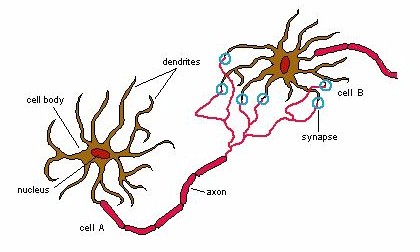
The human brain has roughly 100 billion neurons, which are designed to receive, process and transmit information. Similar to other cells in the body, neurons have a nucleus and cytoplasm, but they differ in that they also have distinct cellular extensions called axons and dendrites. Axons allow neurons to send information to neighboring cells. Dendrites serve as cellular ìantennaeî for receiving signals from other cells.
The point of connection between two neurons is called the synapse. A variety of molecules, including carbohydrates, proteins and neurotransmitters, populate the synapse, and interactions among these molecules control how neurons behave. Each neuron can make over a thousand connections with neighboring cells.
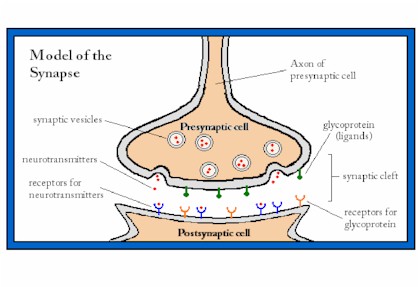
One goal of our laboratory is to identify and understand chemical changes associated with learning and memory. A widely held hypothesis for how memories are encoded is that experience or training induces chemical changes at the synapse between excited neurons. These changes modulate the connectivity and efficacy of neuronal communication, and memories are stored as specific synaptic connections are reinforced and grow stronger over time.